

From a corner office in tiny Buckner, Missouri, to the halls of Congress.
That’s the road travelled by HCC Network CEO Toniann Richard, as she began serving her term this year as president-elect of the National Rural Health Association (NRHA).
Richard was in Washington the week of Feb. 9 for the NRHA’s annual policy institute, which draws approximately 600 attendees from across the country.
During that time, Richard was part of delegations that met with key staffers on the House and Senate budget committees, as well as the new chairman of the House Energy and Commerce Committee.
Those are conversations Richard was not part of previously, even as an officer on the NRHA board, so she enjoyed “ just being able to be at the table to participate in those high-level conversations to ensure that rural providers and rural communities are consistently represented in the discussions around the federal budget.”
Richard also participated in strategy sessions with other NRHA officials on the organization’s action items.
Richard’s term as president-elect begins a three-year commitment. She will assume the presidency next year and remain in a leadership position as the past president.
Richard is also active on the state level, so the question becomes: Why does a CEO overseeing a multimillion-dollar operation with six clinics and a mobile outreach unit feel compelled to take on even more responsibilities with the NRHA?
“Honestly, I just love it,” she said. “I love policy. I love solving big-picture problems … I like complex issues, but then I also really like helping navigate common ground for people.”
It can be frustrating, of course, but Richard said, “I’d rather be having conversations with lawmakers and influencing them in a way that takes perception-versus-reality questions in a way that does create better communities, stronger communities.”
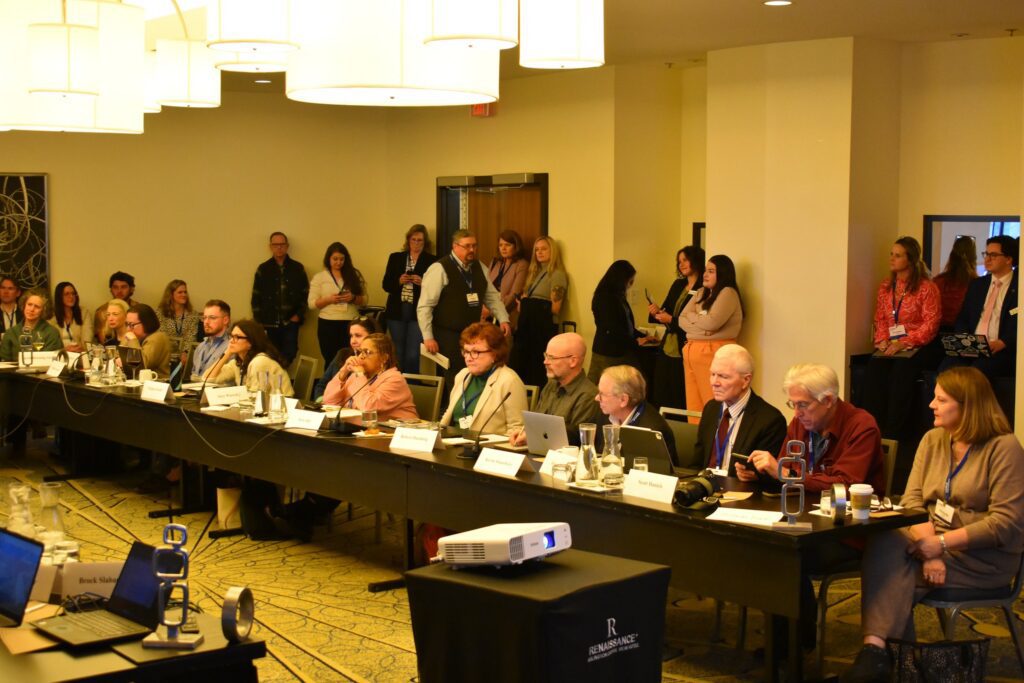
And to answer one question on many people’s lips: No, Richard laughed, her perch will not result in a windfall of federal funding for HCC.
Yet, she said, “I do think that the experience will teach me things along the way that might better prepare our organization for applying for funding.”
Speaking of funding, the beginning of Richard’s term coincides with the launch of the federal Rural Health Transformation Program (RHTP), the $50 billion initiative included in the One Big Beautiful Bill (OBBB) that President Donald Trump signed on July 4, 2025.
The Centers for Medicare & Medicaid Services is allocating the money to the states between fiscal years 2026 and 2030, with the first distributions announced in December. Missouri received approximately $216.3 million in the first round.
While the administration hails RHTP as an “unprecedented federal investment” around several priorities, including workforce development and modernization, critics say the program is a drop in the bucket compared with the more than $1 trillion in Medicaid cuts the OBBB authorized over the next decade.
The Medicaid cuts are projected to hit particularly hard in rural areas.
NRHA says nearly one in five rural adults and 40% of rural children rely on Medicaid or the accompanying Children’s Health Insurance Program. The association also says Medicaid represents about 20% of the payer mix to rural hospitals, raising concerns that the cuts will lead to more hospital closures.
One initiative in the Missouri plan is the establishment of Rural Health Network Hubs, which the Department of Social Services says will connect “every rural resident to seamless high-quality care” through improved access, better care coordination, and technical assistance for local programs.
Richard said her role with NRHA allows her to learn about the implementation of the RHTP in other states. The RHTP was certainly a topic of discussion during Richard’s recent trip to D.C.
“So really where we are right now is being in a space where we can have creative conversations at the national level about what the different states are coming up with, what their creative strategies are,” she said.
“So I think the nice thing about my role right now with NRHA is being able to listen to that anecdotal, boots-on-the-ground dialogue,” Richard added.
The roll-out of the RHTP is one topic Richard is interested in following in her year as president-elect.
Richard will be intrigued to see the “unintended successes” spurred by the national transformation program: innovative solutions that emerge even if they don’t ultimately receive RHTP funding.
“We need to capture those stories,” she said. “What are the things that people are proposing for their statewide RHTP plans that maybe don’t make it there, but they still implement, and they find something that kind of changes the ecosystem?”

